
9/18/2018
On our way to class today, a few girls and I began talking about book recommendations. One friend suggested Half the Sky, by Nicholas Kristof and Sheryl WuDunn, which tells the nonfictional stories of several women in different African and Asian countries who endured forms of sex slavery (http://www.halftheskymovement.org/pages/book.html ).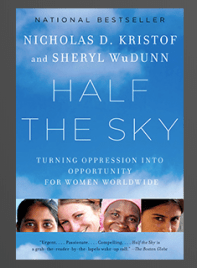
Later, someone else mentioned the recent incident in the news regarding a potential human trafficking case at the Greenville mall. We then arrived to class, and listened to our instructor lecture about the same global crisis.
The next day, September 19th, a video showed up in my Facebook feed of a Floridian woman expressing her serious concern and warning for girls to be attentive to potential threats of traffickers after her encounter at a local grocery store. (click the link below to view the video):
https://www.facebook.com/tampabaynews/videos/2051278535183657/
This series of events all occurred just a couple of weeks before October 6th, the one year anniversary of Rachael’s death. Rachael was a classmate of mine in high school. We both attended Glastonbury High School, a prominent school in an affluent Connecticut suburb. She was a well known girl with whom I shared many friends. On October 6th, 2017, Rachael took her own life after seeing no other alternative to escape her sex enslavement. A man she began seeing in Connecticut eventually persuaded and forced her into sexual acts with ‘clients’ in Manhattan, New York. She would return from the city bruised and battered. She lost the ability to control her own life. Scared, isolated, and depressed, she committed suicide. Discovering this news really hit home and shook my core. Growing up in sheltered Glastonbury, I would hardly consider to be cautious of sex trafficking as a potential threat in my area. Evidently, no one is safe. Especially with today’s deceptions in our addicting social media, the range of ways victims can be targeted is widely expanded. Because of this devastating circumstance, I am watchful of my surroundings in public, realizing that traffickers can seek victims anywhere.
Furthering my point, in August of this year, Greenville News published a story discussing the increased prevalence of human trafficking reported specifically in the county of Greenville. According to the article, Attorney General Alan Wilson accredits the rising cases to “[Greenville’s] connection to Interstate 85 and the area’s proximity to Atlanta and Charlotte, which he said are two cities in the top 20 areas for most human trafficking in the U.S.” He later intensifies his call for action stating the following facts:
“The United States is the world’s top destination for human trafficking with 103,000 child victims of human trafficking being identified every year.”
“ One out of every seven runaways are victims of human trafficking.”
(Gross 2018)
To read the rest of the article visit: https://www.greenvilleonline.com/story/news/crime/2018/08/24/greenville-county-leads-sc-human-trafficking-cases/1084379002/
With such disturbingly high prevalence, it is essential for medical practitioners to be able to recognize signs of trafficking victims. Registered nurse Cheryl Green wrote an informative article providing insight for nurses and any medical caregiver to better identify suspected victims. She explains distinguishable factors such as a patient’s inability to state his or her current location due to excessive confinement from the outside world and hesitation to speak for his or herself in the presence of their trafficker. Physical examination indicators include bruising, genital mutilation or scarring, signs of multiple terminated pregnancies, signs of drug or alcohol abuse or withdrawal, and more (Green 2016). Pictured is a series of suggested questions to ask a suspected victim included in the article:

In another article I read published in the American Medical Association Journal of Ethics, several doctors discuss the need for human trafficking education in medical schools and other programs of the field. The article claims “in a New York City-based study, only 4.8 percent of emergency medicine clinicians reported feeling confident about their ability to identify a victim of human trafficking.” A large portion of victims have visited health centers and are treated unnoticed, returning to their captor. If clinicians are effectively trained, we could save a significant number of enslaved lives (Stoklosa et al 2015).
I would argue that nurses could be the most impactful in saving victims as they are on the front line of patient care through verbal interactions, initial physical examination, and follow up, properly informed nurses perhaps have the highest potential to identify and act on risk factors. Here at Clemson, I definitely intend to raise this point to my instructors and peers. As mentioned above, Greenville, South Carolina is one of the leading areas of human trafficking. With our newly expanded nursing program partnering with Greenville Health System for clinical rotations, it would be utterly ignorant to not include lessons on victim identification.
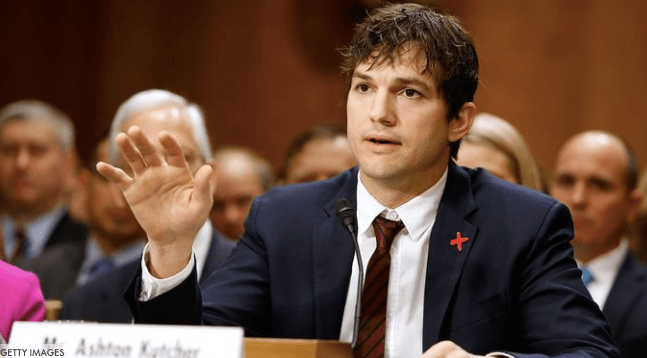
Learn how actor and entrepreneur Ashton Kutcher is actively fighting against Human Trafficking across the Globe:
https://www.youtube.com/watch?v=HUmfsvegMRo
Polaris is a non profit organization that strives to disrupt trafficking networks and help victims. Please consider donating to this impactful and vitally needed program in honor of Rachael’s name:
Sources:
Green, Cheryl. “Human Trafficking: Preparing for a unique patient population” American Nurse Today Volume 11, Number 1, pg 9-12. January, 2016.
Gross, Daniel J. “Greenville County leads SC in human trafficking cases, Attorney General Alan Wilson says”. Greenville News. August 24, 2018.
Stoklosa, H., Grace, A., Littenberg, N. “Medical Education on Human Trafficking”. American Medical Association Journal of Ethics. October 17, 2015.
 Keeping Up with Global Health